
Mymind Web & Desktop · Snapshot
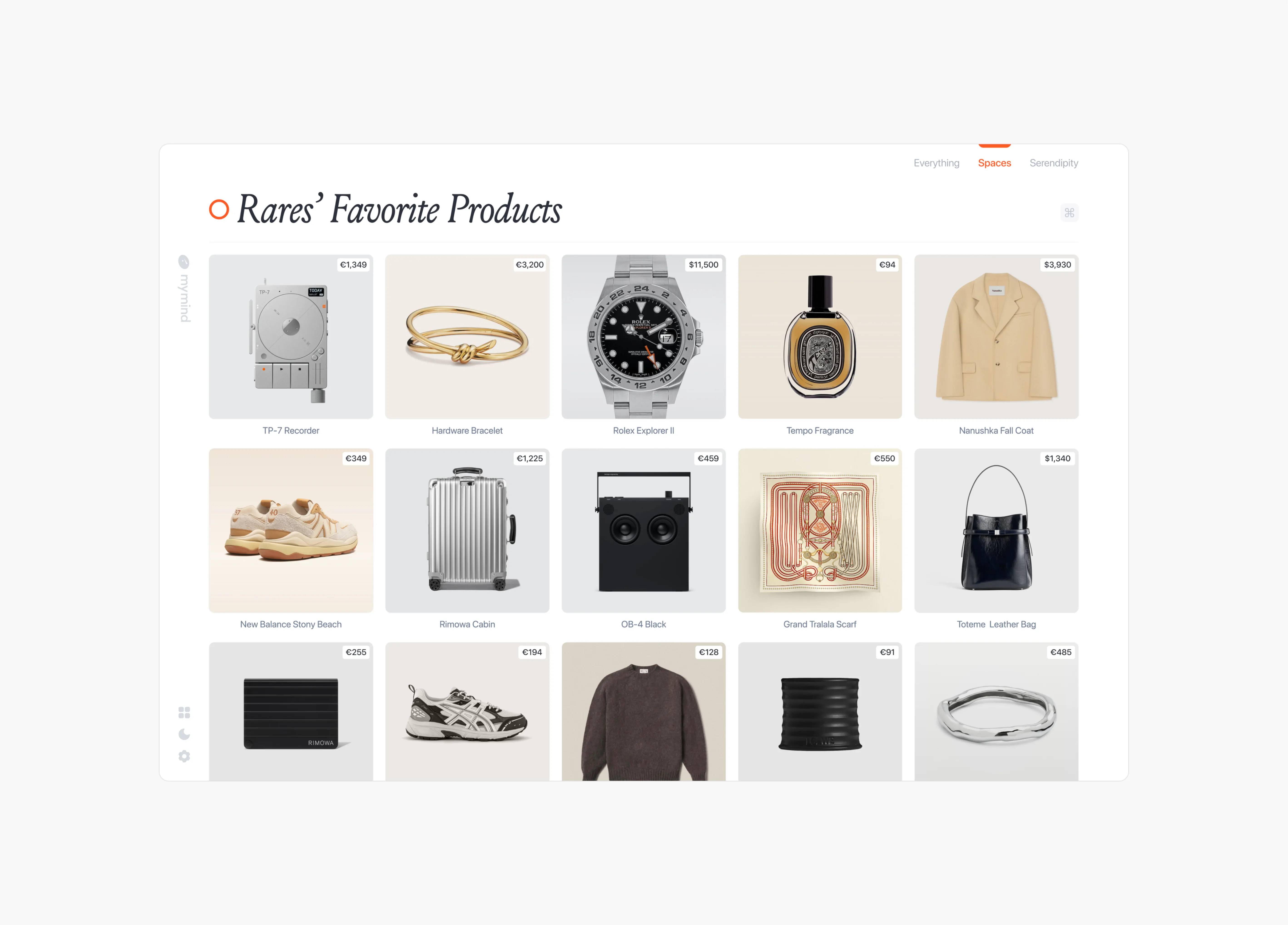
Led product design for Mymind’s web and desktop experience, shaping onboarding, discovery, engagement systems, and interaction patterns for a global user base. Translated AI into a calm, privacy-first knowledge tool that makes ideas effortless to save, search, and rediscover without folders, feeds, dashboards, or manual organization.
Deep Dive
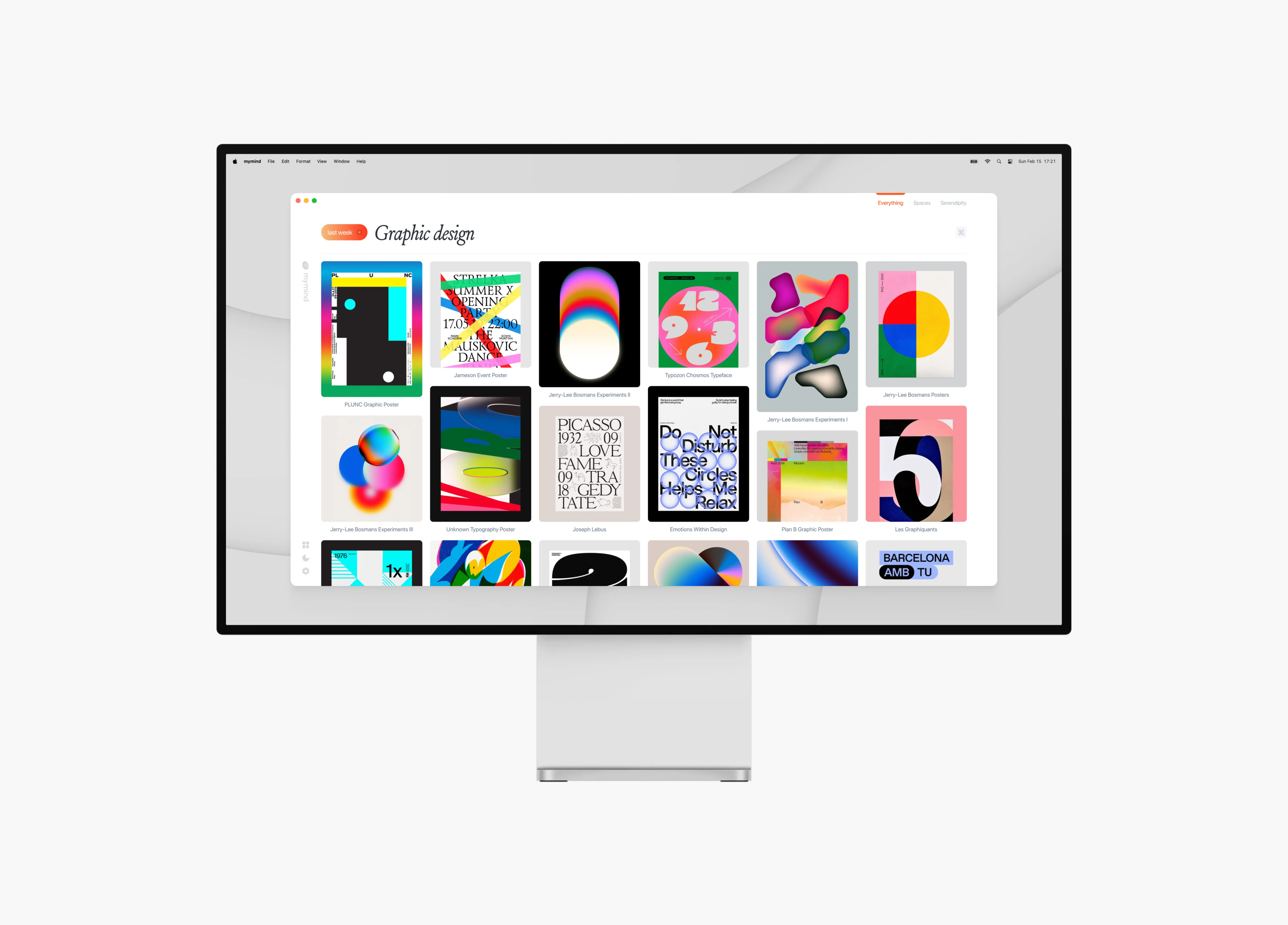
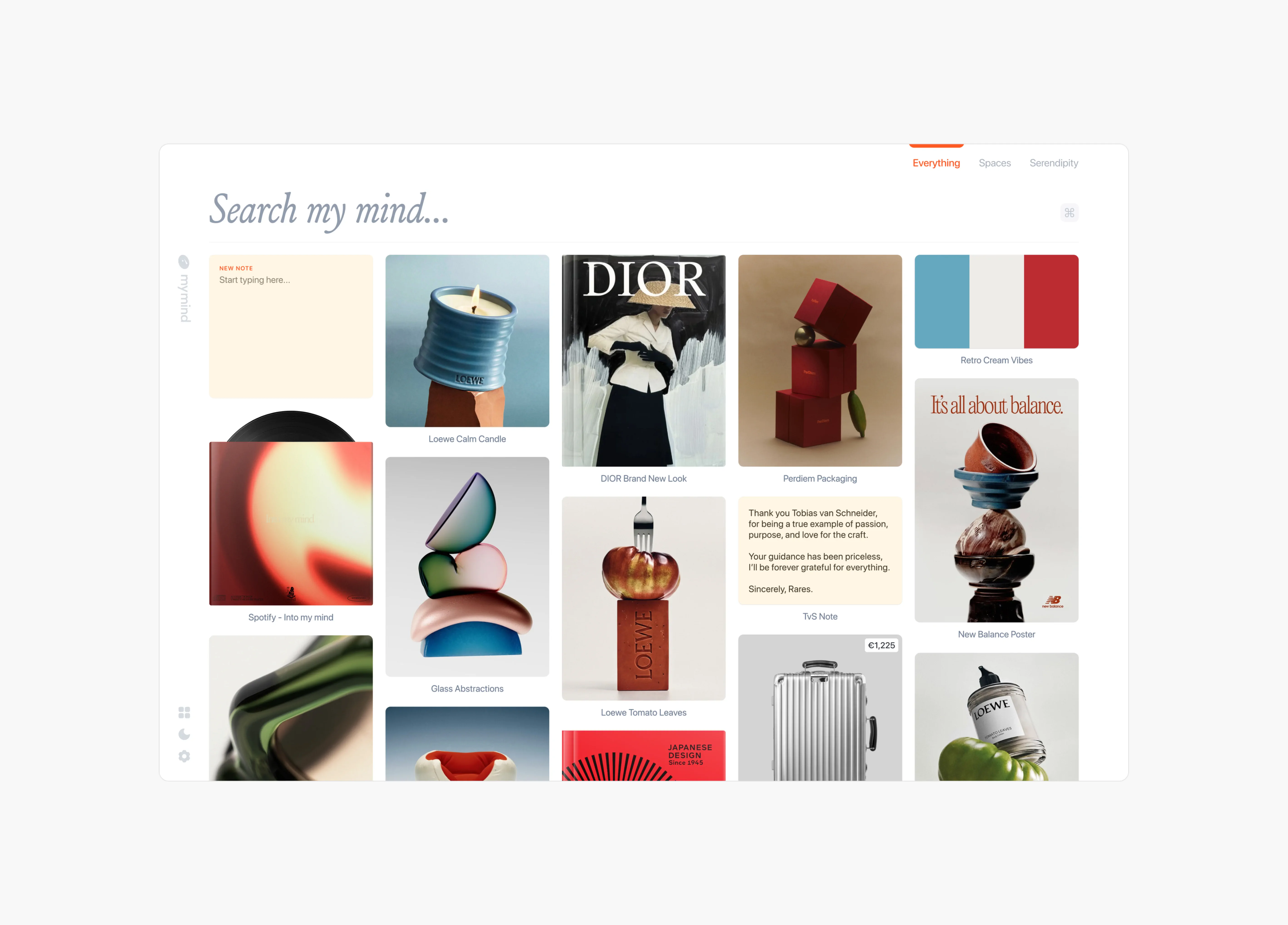
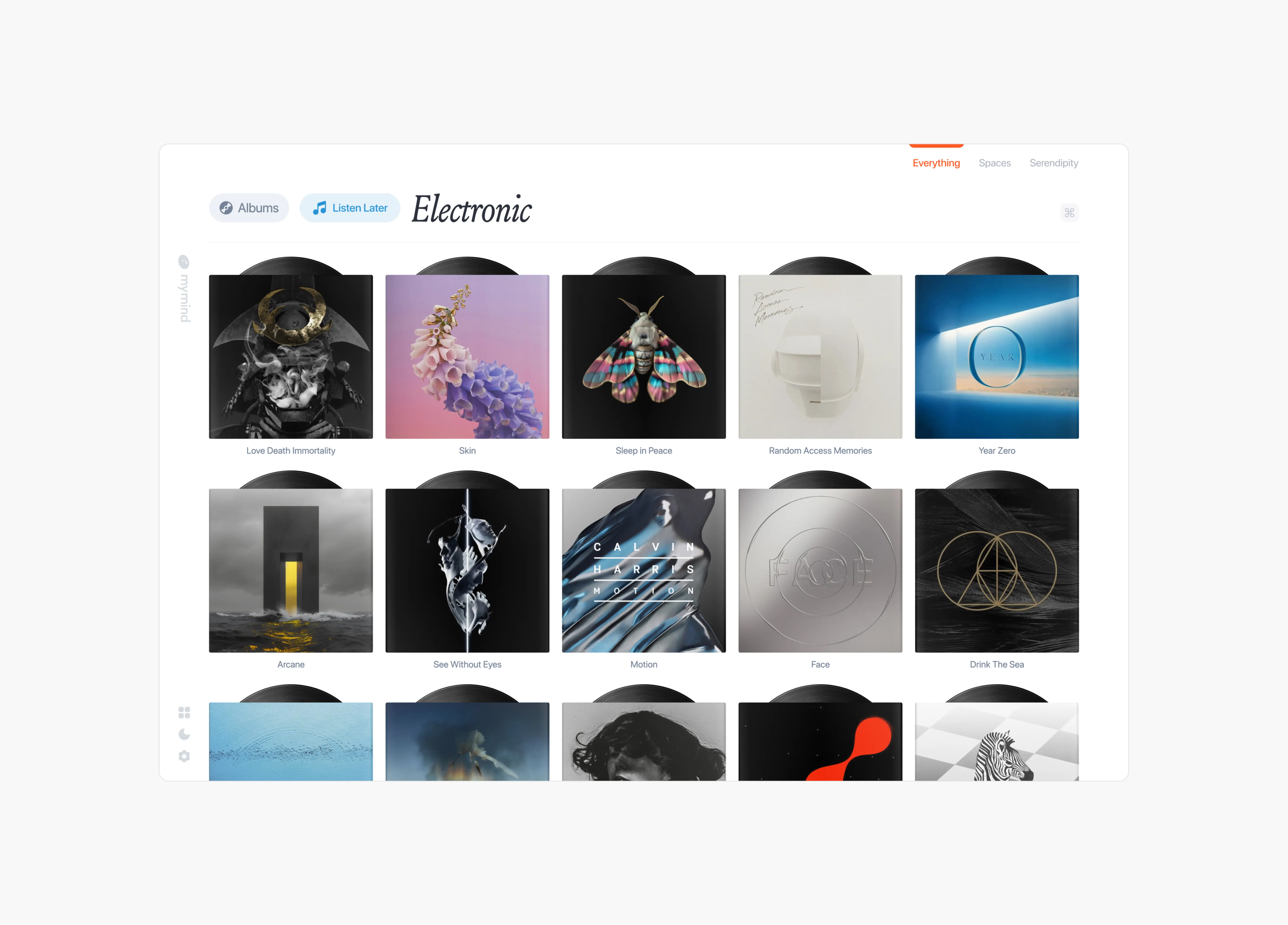
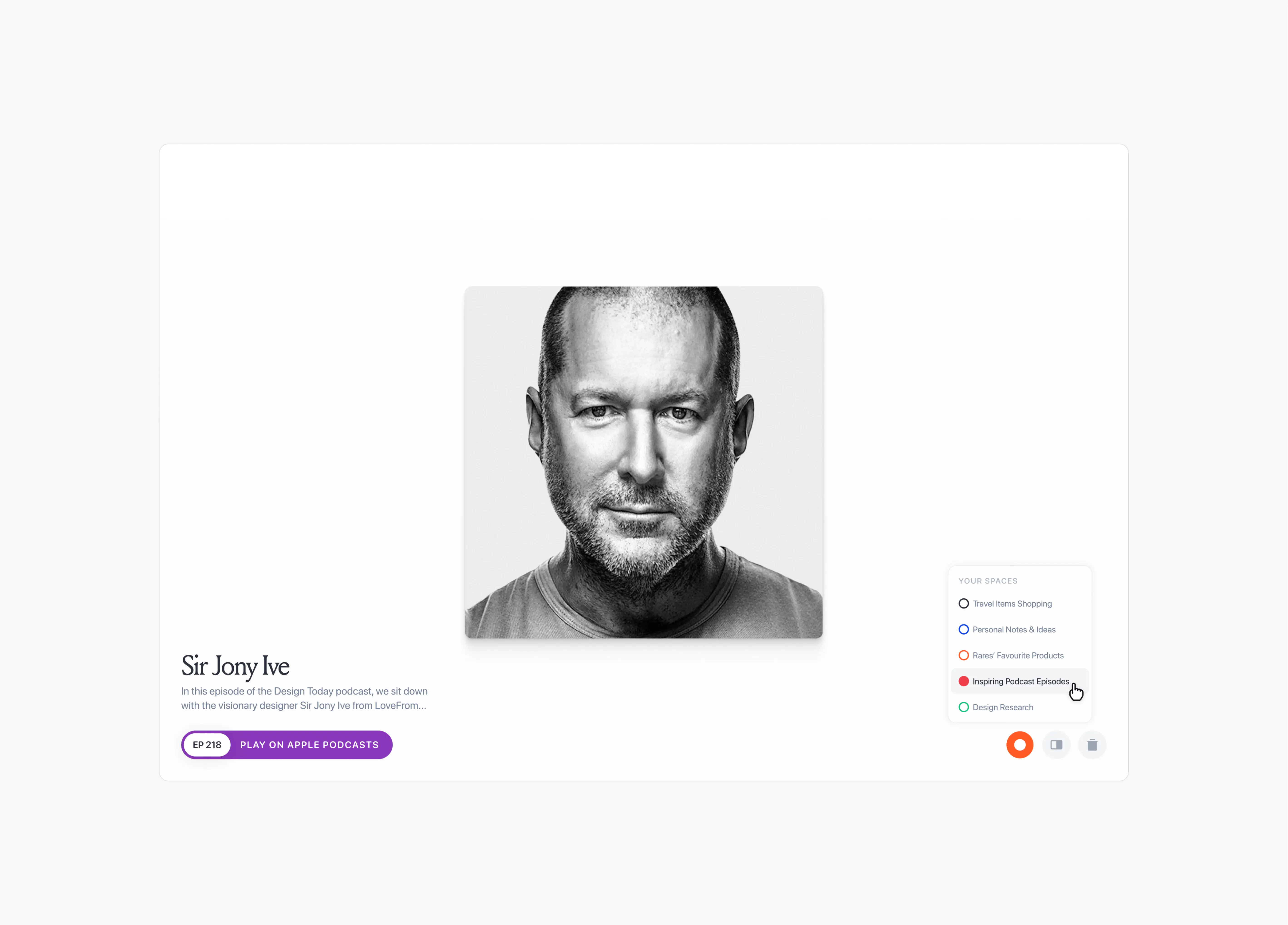
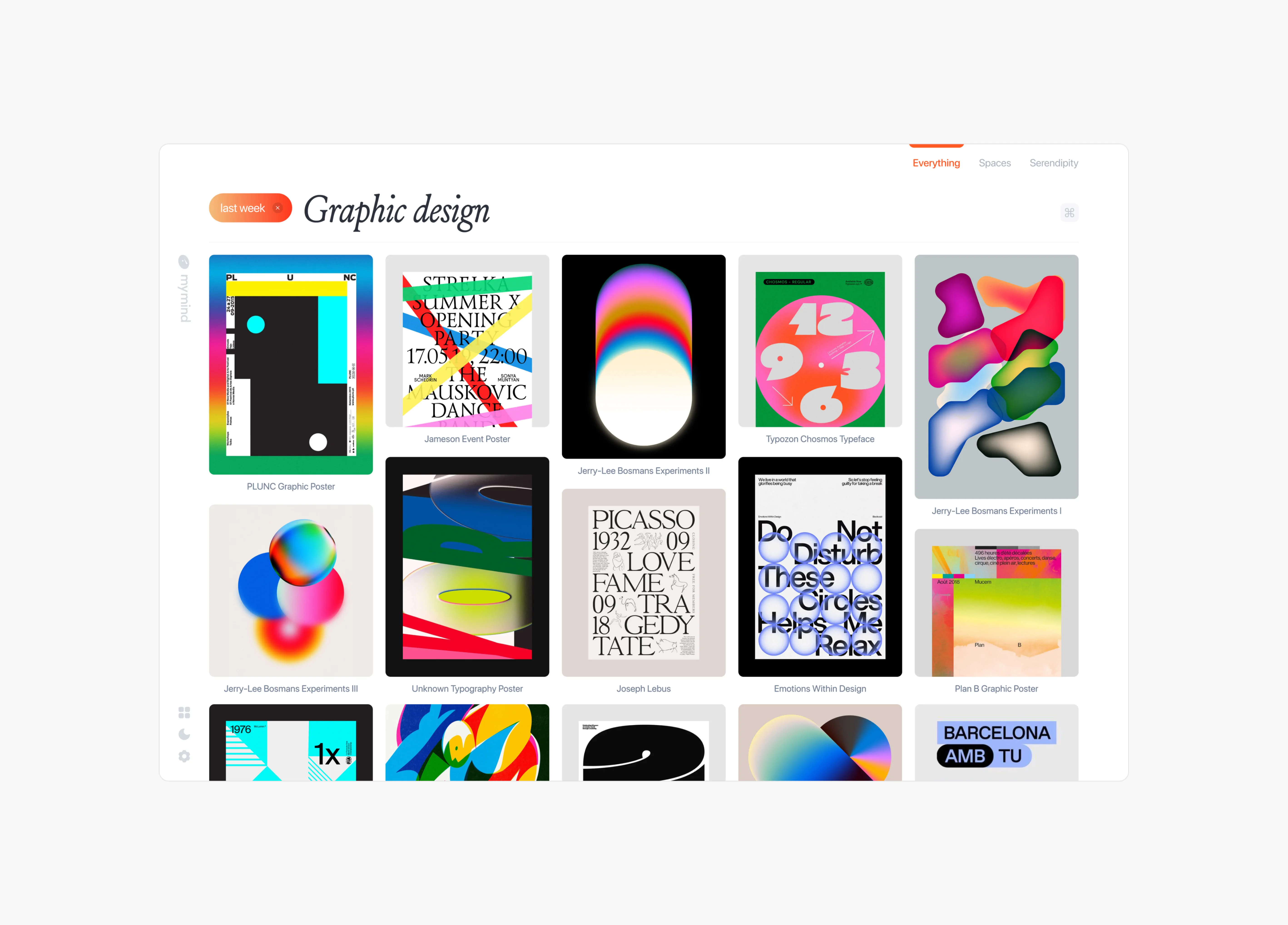
Most knowledge tools ask people to manage information through folders, tags, boards, databases, or manual structures. As collections grow, the system becomes another thing to maintain, creating friction between saving ideas and actually finding them again. Mymind takes a different approach, using AI to quietly organize, catalogue, and connect saved content in the background so users can focus on collecting ideas, references, notes, images, links, and things that inspire them.
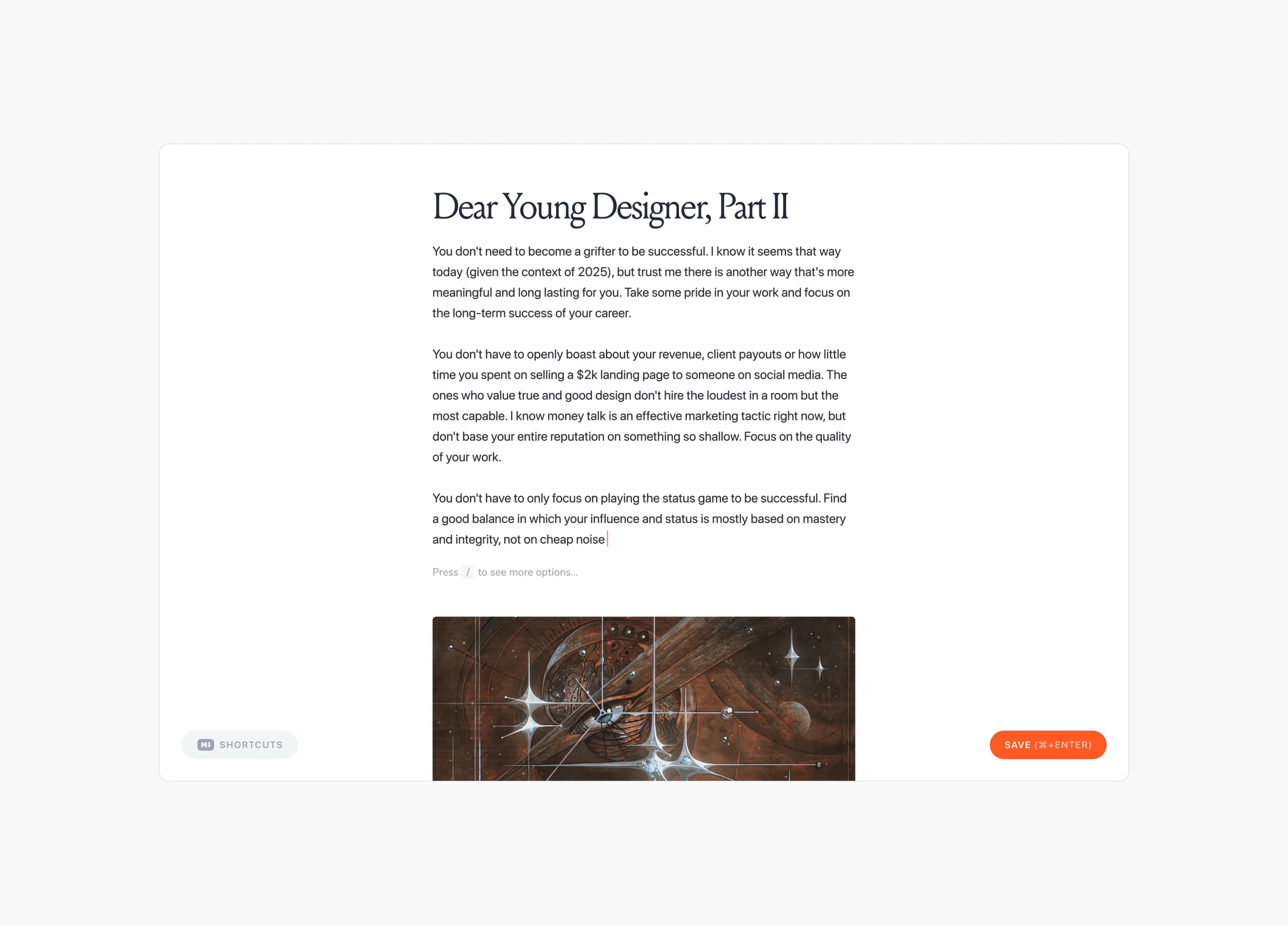
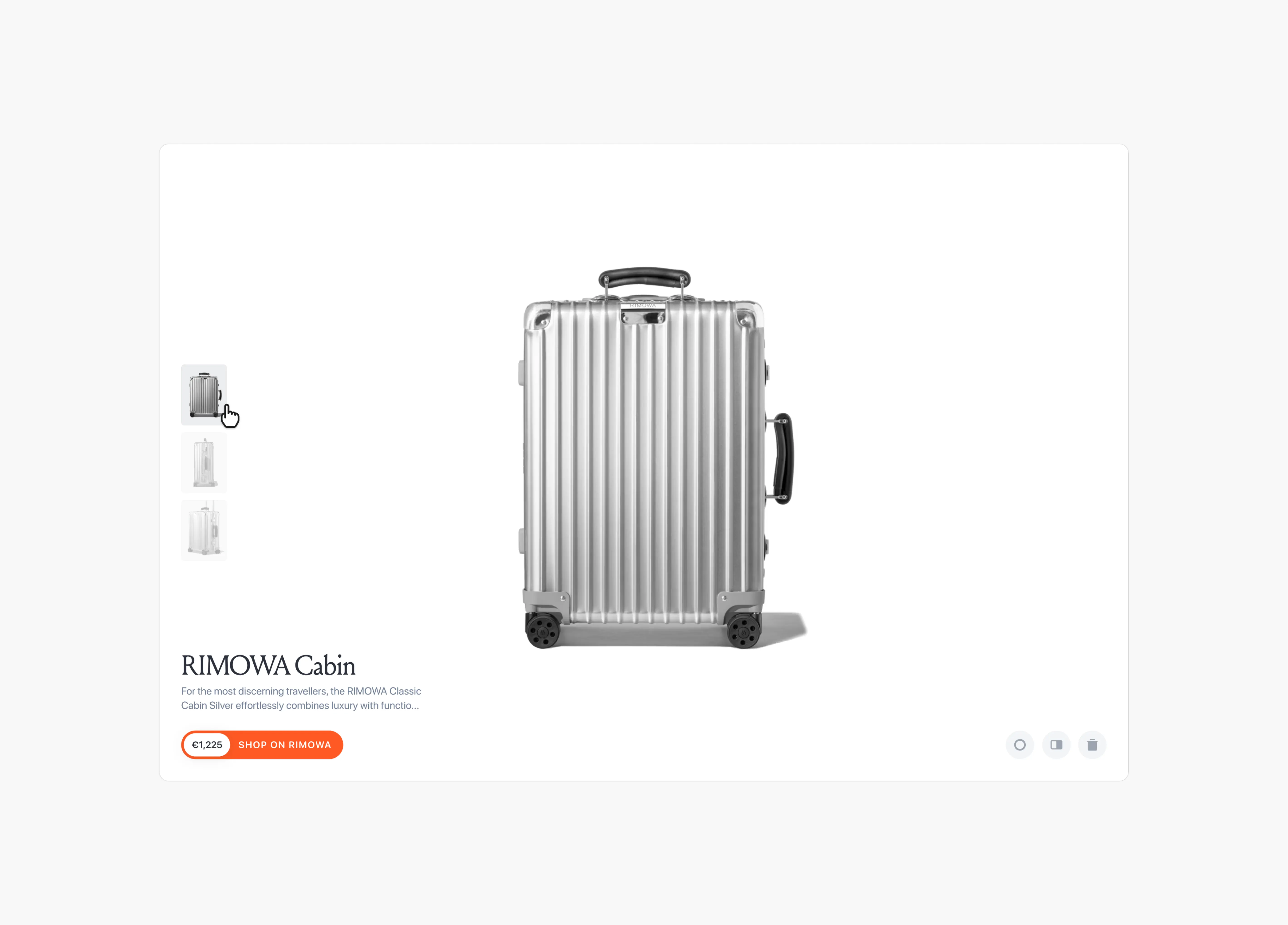
I led product design across key parts of the web and desktop experience, including onboarding, engagement systems, discovery patterns, interaction details, and ongoing product refinements. The work focused on making AI feel useful, invisible, and trustworthy, helping users save, search, and rediscover ideas without exposing unnecessary complexity or relying on folders, feeds, dashboards, or manual organization.
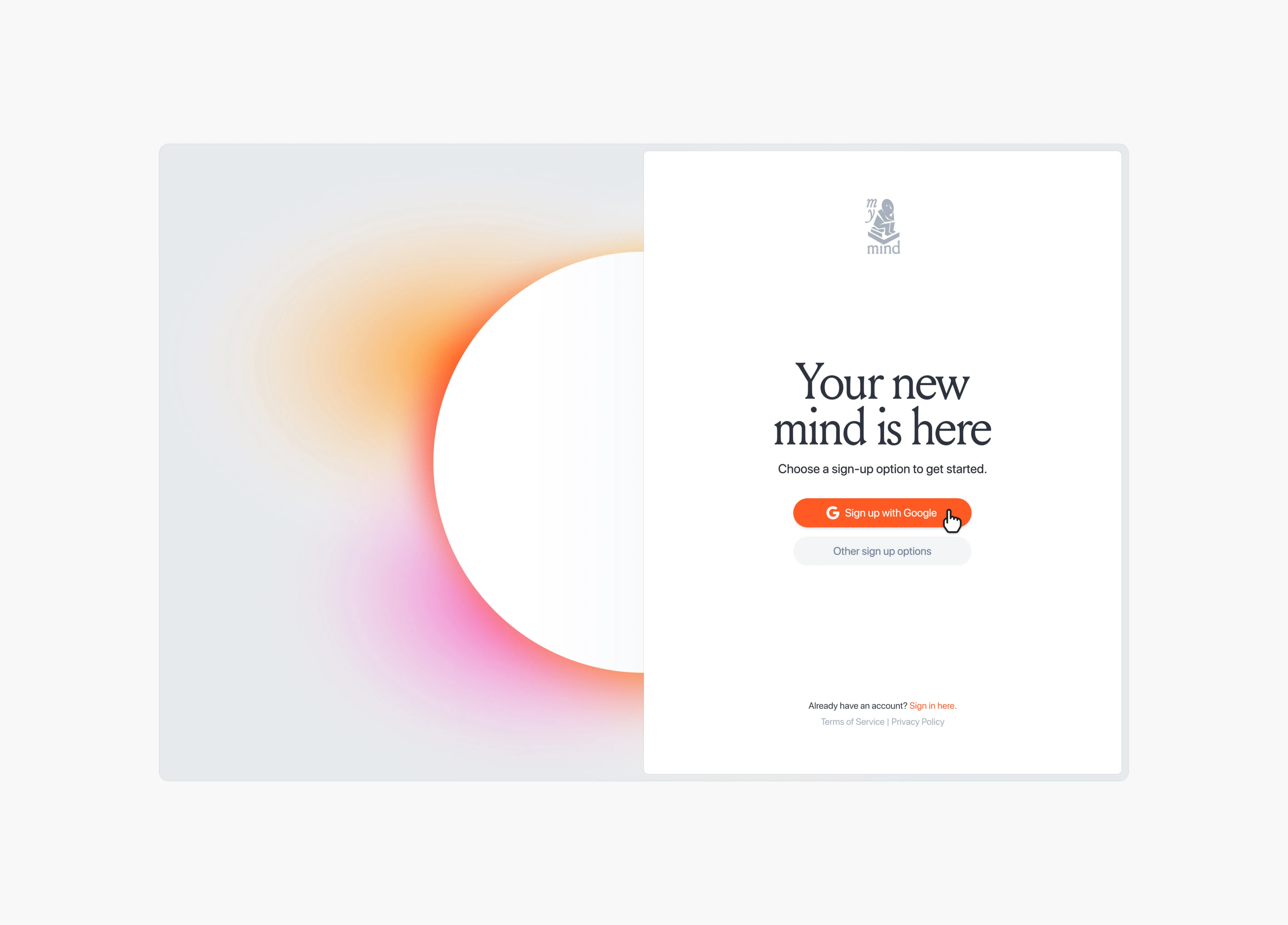
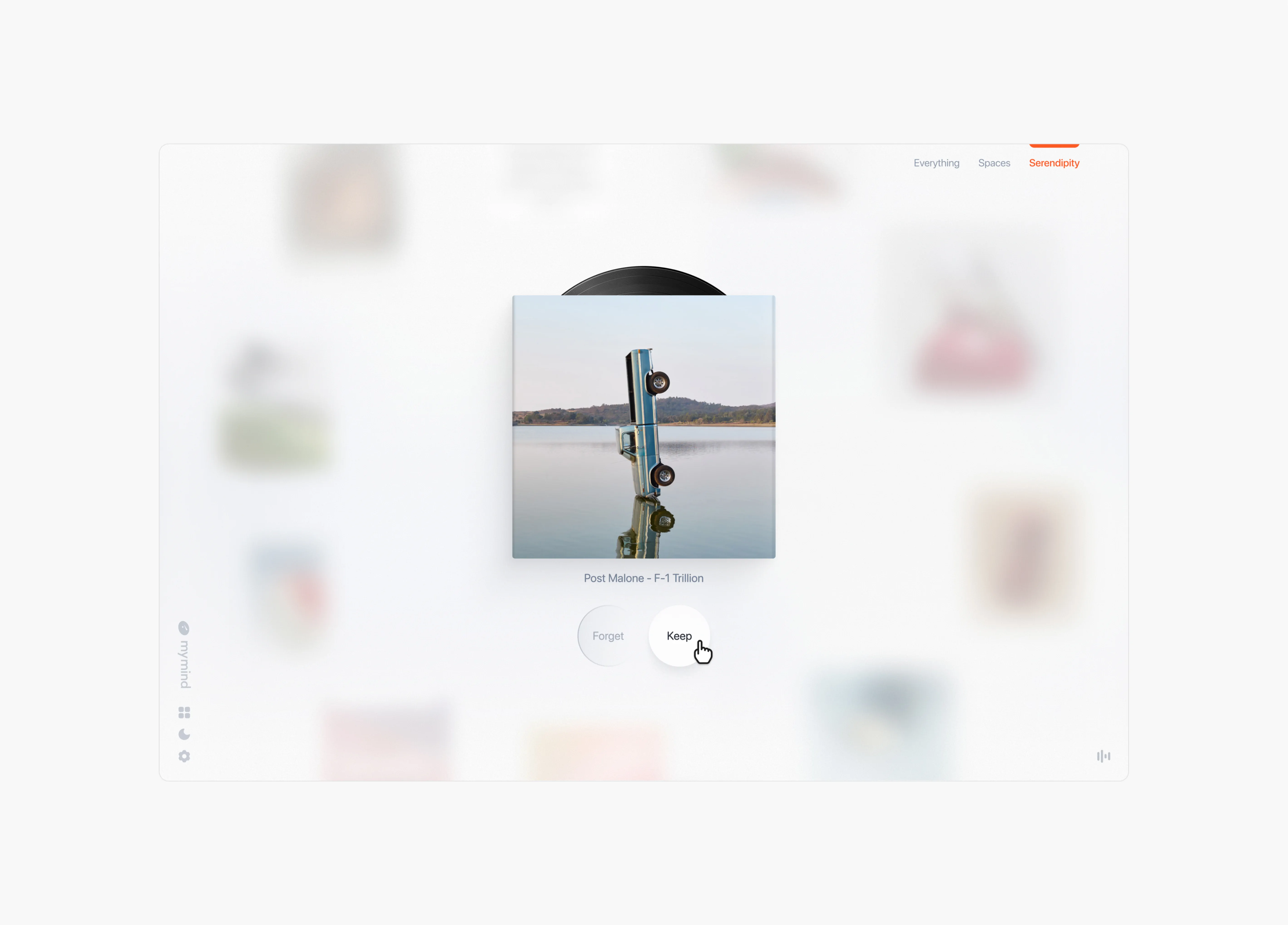
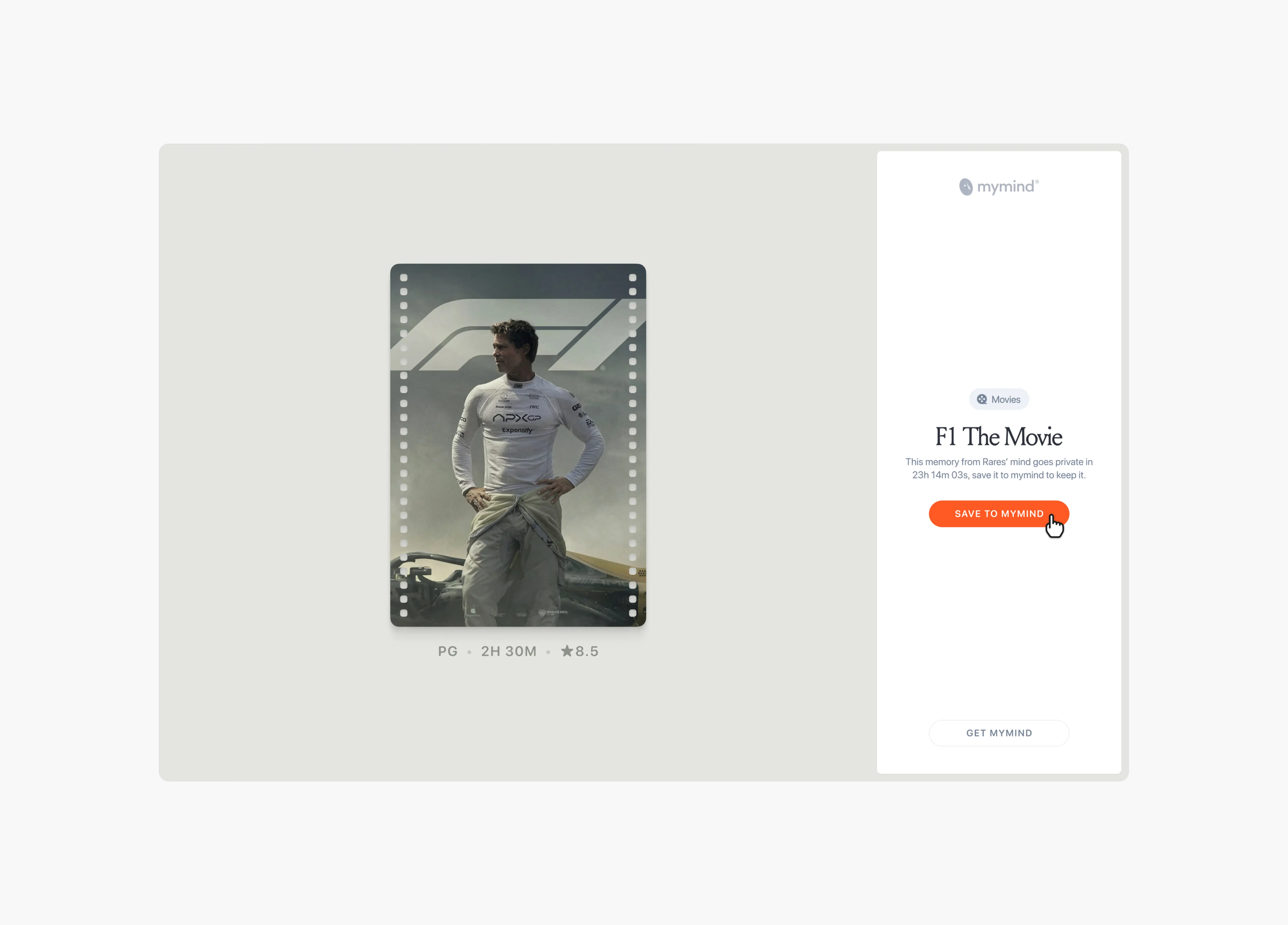
One of my primary initiatives was redesigning onboarding to create a clearer entry into the product. Instead of building a traditional tutorial, I shaped calm, direct moments that demonstrated saving, searching, and rediscovery, helping new users understand the value of Mymind without overwhelming them with setup or explanation. I also led the concept and design of the achievements system, reframing engagement as personal discovery through collectible objects, subtle progression, and selective moments of celebration rather than streaks, social pressure, or visible performance metrics.
Designing Mymind meant working without many of the signals modern products usually optimize around. Product direction relied on qualitative research, user conversations, support feedback, product intuition, and careful observation of how people saved, searched, and returned to their knowledge over time. As users accumulated hundreds or thousands of saved items, the interface needed to support scale while staying simple, focused, and approachable.
The hardest balance was making the product feel powerful without making it feel busy. AI had to support the experience without becoming the interface, allowing complexity to live beneath the surface while giving users confidence that their saved knowledge was organized, searchable, and meaningfully connected underneath. The result is a calm, privacy-first knowledge experience built around memory, connection, and long-term usefulness rather than activity, pressure, or attention-driven mechanics.
Takeaways
By prioritizing privacy, calmness, and user ownership, Mymind creates a different relationship between people and their digital knowledge. The product does not ask users to perform, publish, organize, or optimize themselves. It gives them a private space to collect, remember, and rediscover what matters.
One of the most important lessons was that AI powered products do not need to make the technology feel loud. In Mymind, the strongest design decisions often made the system feel quieter. The goal was not to showcase AI as a feature, but to translate it into moments of clarity, trust, and effortless information discovery and recall.
Saved content becomes more valuable over time as the system surfaces relationships between ideas and helps collections feel meaningful rather than overwhelming. This required designing for long-term use, not just first-session comprehension.
The project also strengthened my ability to design inside ambiguity. Without relying on conventional growth metrics or engagement dashboards, product decisions had to be grounded in user conversations, product principles, craft, and close collaboration with engineering and leadership.
As part of a small, focused team, my design work directly shaped the direction of the product across onboarding, engagement, discovery, and interaction systems. The result is a calm, privacy-first knowledge experience used by a global audience, showing that thoughtful products can scale without relying on noise, pressure, or attention-driven mechanics.
Credits
Creative Direction: Tobias van Schneider
Engineering: Jason Nelson, Michaël Garcia, Francisco Franco